
Raised Bed vs In Ground Garden: Choosing Your Best Setup
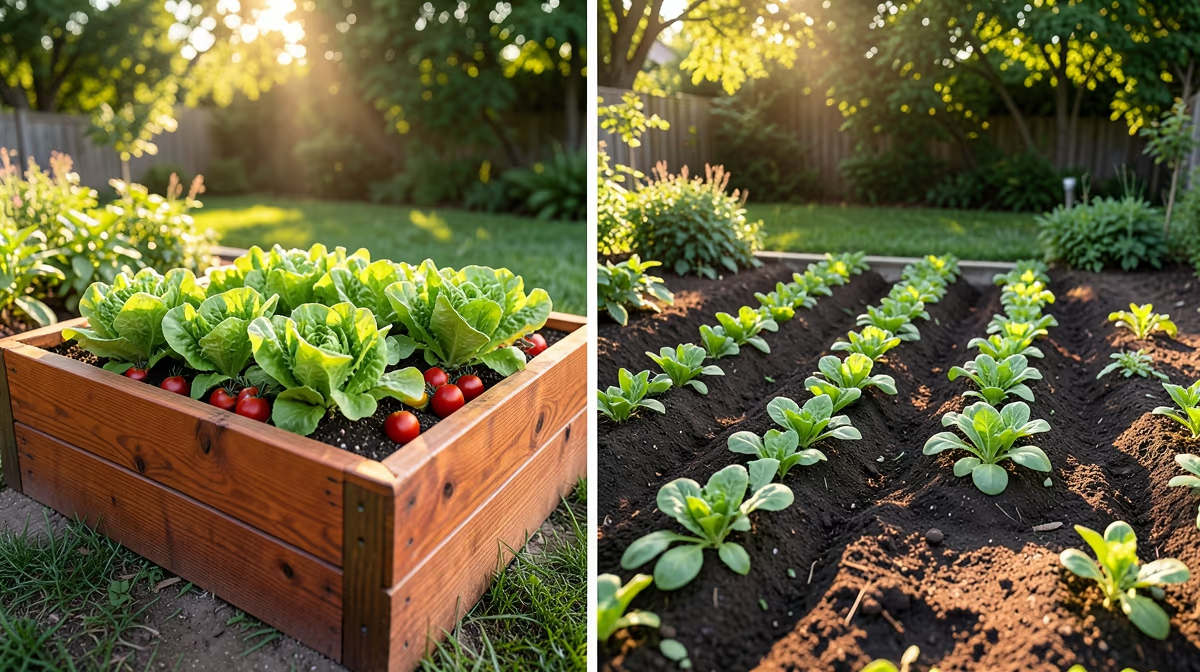
Deciding how to set up your planting space is one of the most important decisions you will make for your backyard. Choosing a raised bed vs in ground garden depends on your soil quality, budget, physical comfort, and the types of crops you want to grow. Both methods have distinct advantages that can lead to a bountiful harvest, but one will likely fit your unique lifestyle and yard conditions much better than the other.
If you have poor, rocky, or clay soil and want less strain on your back, raised beds are worth the initial investment, but if you have fertile soil and a tight budget, an in-ground garden is the most cost-effective way to grow at scale.
Soil Quality and Control
In-ground gardens rely entirely on the existing dirt in your backyard. If you are blessed with fertile, loamy soil, you can simply clear the grass, add some compost, and start planting. However, many urban and suburban yards contain heavy clay, rocky terrain, or sand that requires years of consistent amending to become productive. There is also a risk of soil contamination from old paint, lawn chemicals, or nearby road runoff in high-traffic areas.
Raised beds bypass these natural soil issues completely. Because you build a frame above the ground, you can fill it with a customized, clean mixture of topsoil, compost, and organic matter from day one. This provides your plants with optimal drainage and excellent nutrition immediately. Furthermore, because nobody steps inside the raised frames, you never have to worry about soil compaction, which keeps the root systems of your vegetables loose, aerated, and healthy.
Setup Costs and Initial Effort
An in-ground garden is incredibly friendly to your wallet. The primary costs are basic hand tools, seeds, and perhaps a few bags of compost to work into the dirt. The physical labor is intense at first, requiring you to dig up sod, remove deep roots, and turn the soil over. However, the financial barrier to entry is almost non-existent, making it the perfect choice for beginners who want to try gardening without making a major financial commitment.
Building raised beds requires a much higher initial investment of both money and time. You must purchase construction materials like cedar, redwood, metal, or concrete blocks, along with rust-resistant hardware. Once the frames are built, you must buy a large volume of bagged or bulk soil to fill them, which can quickly become expensive.
To reduce the cost of filling deep raised beds, use the hugelkultur method by layering logs, branches, dry leaves, and grass clippings in the bottom half of the bed before adding your high-quality soil mix on top.
Physical Accessibility and Maintenance
For many home growers, physical comfort determines how much they enjoy tending to their plants. In-ground gardens require constant bending, kneeling, and squatting. Over time, maintaining a large in-ground plot can become physically taxing on your back, knees, and joints, especially during the heavy weeding seasons of late spring and summer.
Raised beds are significantly easier on the human body. By raising the planting surface anywhere from 12 to 30 inches off the ground, you can weed, prune, and harvest while sitting comfortably on the edge of the frame or standing up.
Weed control also differs greatly between the two methods:
- In-ground plots are highly susceptible to encroaching lawn grass and deep-rooted perennial weeds.
- Raised beds create a physical barrier that blocks crawling weeds from entering.
- Loose soil in raised beds makes any wind-blown weeds incredibly easy to pull by hand.
Pest management is another factor where raised beds have a slight advantage. While crawling insects can access both setups, you can easily attach wire mesh or hardware cloth to the bottom of a raised bed frame before filling it to prevent burrowing pests like gophers and moles from eating your plants from below.
Water, Drainage, and Temperature Dynamics
Soil temperature and moisture levels behave very differently depending on which setup you choose. When comparing a raised bed vs in ground garden, drainage is often the deciding factor for regions with heavy rainfall.
Soil in raised beds warms up much faster in the early spring because it is elevated and exposed to the ambient air on all sides. This allows you to plant seeds and cool-season crops earlier in the year, effectively extending your growing season. However, because raised beds drain so efficiently, they also dry out much faster. During hot summer droughts, you will need to water raised beds more frequently, sometimes even daily, which can increase your water bill.
In-ground soil retains moisture much longer because it is insulated by the surrounding earth. This natural insulation protects plant roots from extreme heatwaves and reduces the frequency of irrigation. The downside is that if your yard has poor drainage, water can pool on the surface during heavy rainstorms, which suffocates plant roots and leads to root rot.
Direct Comparison of Both Methods
| Gardening Feature | Raised Bed Gardening | In-Ground Gardening |
|---|---|---|
| Upfront Cost | Moderate to high for frames and soil | Very low; basic tools and amendments |
| Soil Quality | Fully customizable and immediately fertile | Dependent on natural yard dirt; needs time |
| Physical Strain | Minimal; comfortable working height | High; constant bending and kneeling |
| Water Retention | Drains very quickly; dries out fast | Retains moisture well; less frequent watering |
| Setup Time | Several hours to days for construction | A few hours of clearing turf and digging |
| Portability | Semi-permanent; difficult to move later | Easy to expand, shrink, or relocate |
Which Method Should You Choose?
To make your final decision, evaluate your specific yard, budget, and physical needs.
Choose an in-ground garden if:
- You have a large plot of land and want to grow sprawling, space-hungry crops like corn, pumpkins, melons, or winter squash.
- You are on a tight budget and want to start growing food immediately with minimal expense.
- Your native backyard soil is already naturally loose, fertile, and drains well.
- You want the flexibility to change the layout, shape, or size of your garden next season without tearing down structures.
Choose a raised bed garden if:
- Your yard has heavy clay, rocks, tree roots, or potential soil contaminants.
- You suffer from back pain, knee issues, or limited mobility that makes working at ground level difficult.
- You live in a wet climate with poor yard drainage, or a cold climate where you need to extend your spring growing season.
- You want a neat, orderly, and highly structured landscape design that keeps grass and garden plants completely separated.
Frequently Asked Questions
Are raised beds better than in-ground gardens for growing vegetables?
Raised beds are highly effective for root vegetables and leafy greens because the loose, uncompacted soil allows roots to spread easily. However, large, sprawling crops like pumpkins and sweet potatoes are often easier to manage in-ground where they have unlimited room to run.
Do raised beds need to be watered more often than in-ground gardens?
Yes, raised beds dry out faster because they are elevated and have exposed sides that allow water to drain and evaporate quickly. You should expect to water them more frequently than an in-ground plot, especially during the peak of summer.
What is the cheapest material to build a raised bed?
Untreated pine is usually the most budget-friendly lumber option, though it will rot faster than rot-resistant woods like cedar. You can also build free-form raised beds using salvaged materials like bricks, concrete blocks, or logs found on your property.
Can you put a raised bed directly on grass?
Yes, you can place a raised bed directly over grass. To prevent the grass and weeds from growing up through your new soil, lay down a thick layer of cardboard or several layers of newspaper at the bottom of the bed before filling it.
Conclusion
Both raised beds and in-ground gardens can yield incredible, abundant harvests when matched with the right environment and gardener. Evaluate your physical needs, check the quality of your native soil, and set a budget before you begin construction or digging. Starting small with either method allows you to learn how your yard behaves throughout the seasons, ensuring long-term success for your home garden.


