
Choose the Right Pot Size When Repotting: Complete Guide
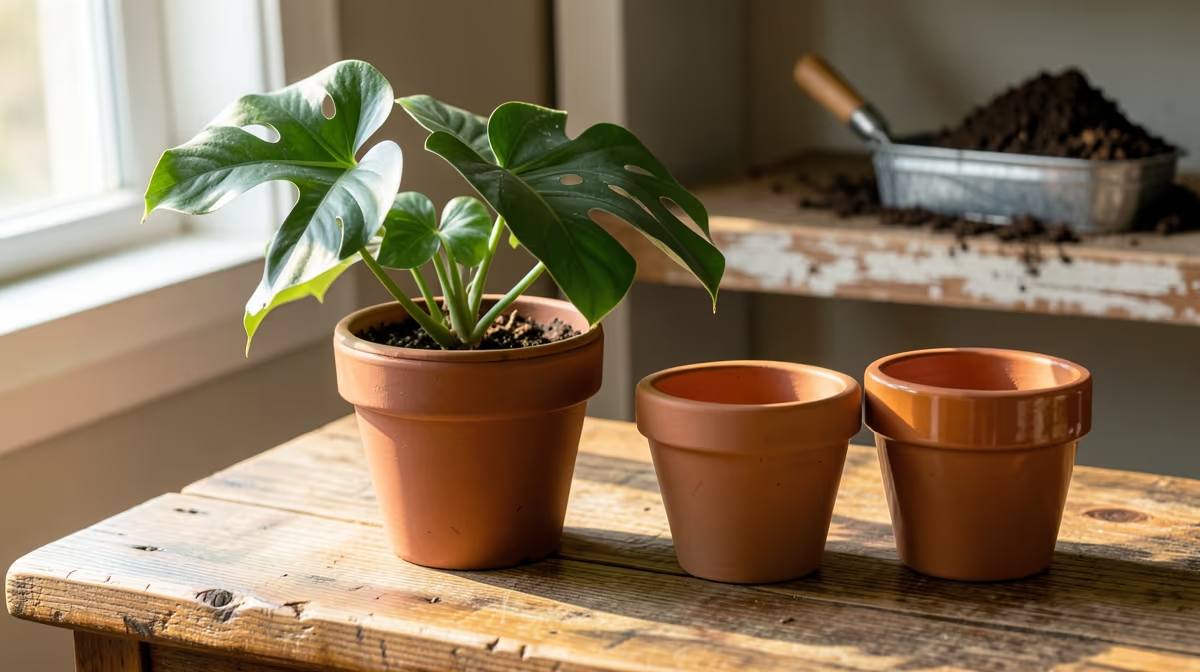
Selecting the perfect container is crucial for your plant's survival and long-term health. If you want to keep your indoor garden thriving, learning how to choose the right pot size when repotting prevents waterlogging and encourages steady root growth. Utilizing a container that is too large or too small can easily stunt growth or even lead to root decay.
Always select a new pot that is 1 to 2 inches larger in diameter than the current container for small to medium plants, and no more than 4 inches larger for massive floor plants.
The Golden Rule of Pot Sizing
The most common mistake gardeners make is giving a plant too much room to grow by placing it in a massive pot. While this seems logical, it often leads to soil compaction and water retention issues. For the vast majority of foliage plants, you should only increase the container size by a small, incremental margin.
For plants currently housed in pots under 10 inches in diameter, look for a new container that is 1 to 2 inches wider across the rim. For larger specimen plants growing in pots 10 inches or wider, you can scale up by 3 to 4 inches. When you choose the right pot size when repotting, you maintain a healthy, balanced ratio of soil to roots.
This gradual progression ensures that the roots can quickly colonize the new soil. If the root system cannot reach the outer edges of the pot, the unoccupied soil remains wet for too long, creating an anaerobic environment where harmful root pathogens thrive.
Why Container Size Matters for Root Health
To understand why pot size is so critical, you have to look at how water moves through soil. Soil acts like a sponge, holding onto moisture until the plant's roots absorb it.
If a tiny root system is placed into a giant pot, there is a massive volume of wet soil surrounding those small roots. Because the root surface area is too small to drink up all that water, the soil remains saturated for days or even weeks. This persistent wetness leads to overwatering, which suffocates the roots by cutting off their oxygen supply, causing them to rot and turn black.
Conversely, a pot that is too small leads to a root-bound plant. In this scenario, the roots have filled the entire container, leaving very little soil to hold moisture and nutrients. You will find yourself watering the plant constantly, yet the leaves will still droop, turn yellow, and show signs of nutrient deficiency because the roots have no soil left to draw sustenance from.
Sizing Guidelines by Plant Size
To make your decision easier, you can use a standardized sizing progression. Below is a practical guide showing how to step up your container sizes based on what your plant is currently growing in.
| Current Pot Diameter | Recommended New Pot Diameter | Best Plant Types |
|---|---|---|
| 2 to 4 inches | 3 to 5 inches | Small succulents, starter plugs, herbs |
| 6 to 8 inches | 8 to 10 inches | Ferns, pothos, medium peace lilies |
| 10 to 12 inches | 12 to 14 inches | Monsteras, fiddle leaf figs, snake plants |
| 14+ inches | 16 to 18 inches | Mature indoor trees, large palms, shrubs |
Using this progression keeps the soil-to-root ratio balanced, ensuring the root ball can easily adapt to its new home without drowning in excess wet compost.
How to Measure Your Plant's Root Ball
Sometimes, the current pot size is not a reliable indicator of what the plant actually needs. If a plant has suffered from root rot in the past, or if it is a newly purchased specimen that is highly root-bound, you need to measure the root ball itself rather than the old pot.
To do this, gently slide the plant out of its container and shake away any loose, uncolonized soil. Inspect the mass of roots left behind.
- Measure the width of the active root ball at its widest point using a ruler or tape measure.
- Measure the depth from the top of the root system to the bottom.
- Choose a new pot that provides roughly 1 to 2 inches of clearance all around the sides and bottom of this root mass.
This method is particularly helpful when rehabilitating a sick plant. If you had to prune away rotted roots, the remaining healthy root system might actually need a smaller pot than the one it came out of to recover safely.
Exceptions to the Standard Sizing Rule
While the 1-to-2-inch increase works for most houseplants, certain species have unique growth habits that require you to adjust your strategy.
Slow-Growing and Succulent Plants
Fast-Growing Outdoors and Summer Annuals
Crucial Features Beyond Width
When searching for the correct container, you must look at more than just the diameter across the top rim. The depth of the pot and its features play a massive role in plant health.
Standard pots are usually as deep as they are wide. However, shallow pots (often called bulb pans or utility pots) are much better for plants with shallow root systems, such as African violets and succulents. Deep pots are ideal for taprooted plants or heavy feeders like climbing vines that need a deep anchor.
Additionally, you must ensure the container has functional drainage holes.
A pot without drainage holes acts like a bucket, trapping excess water at the bottom and suffocating your plant's roots within weeks.
If you find a decorative pot you love that lacks drainage holes, use it as a cachepot. Keep your plant in a slightly smaller plastic nursery pot with drainage holes, and slip that assembly inside the decorative outer pot. This allows you to easily remove the inner pot to water the plant and let it drain completely before putting it back.
Frequently Asked Questions
How do I know if my plant needs a bigger pot?
Look for roots growing out of the bottom drainage holes, water running straight through the pot without soaking in, or stunted growth during the active spring season. If the soil dries out within a day or two of watering, the plant is likely root-bound and ready for a larger home.
Can I put a small plant in a large pot if I water it less?
It is highly discouraged because watering less only wets the top layer of soil, leaving the lower roots dry and stunted. Meanwhile, any deep watering will saturate the excess soil for too long, inevitably leading to root rot.
Is it better to use plastic or terracotta pots when sizing up?
Terracotta is porous and allows moisture to evaporate through the sides, making it highly forgiving if you accidentally choose a slightly larger pot. Plastic pots trap moisture, meaning you must be much more precise with your sizing to avoid waterlogging the soil.
Should I put rocks at the bottom of a pot without drainage holes?
No, putting rocks at the bottom does not create drainage; instead, it raises the water table closer to the roots, increasing the risk of rot. Always use a pot with actual drainage holes or use a double-potting system.
Conclusion
Choosing the right pot size when repotting is a simple but vital step in successful plant care. By sticking to the golden rule of increasing the container diameter by 1 to 2 inches, measuring the actual root ball, and ensuring proper drainage, you will protect your plants from root rot and help them thrive for years to come.


